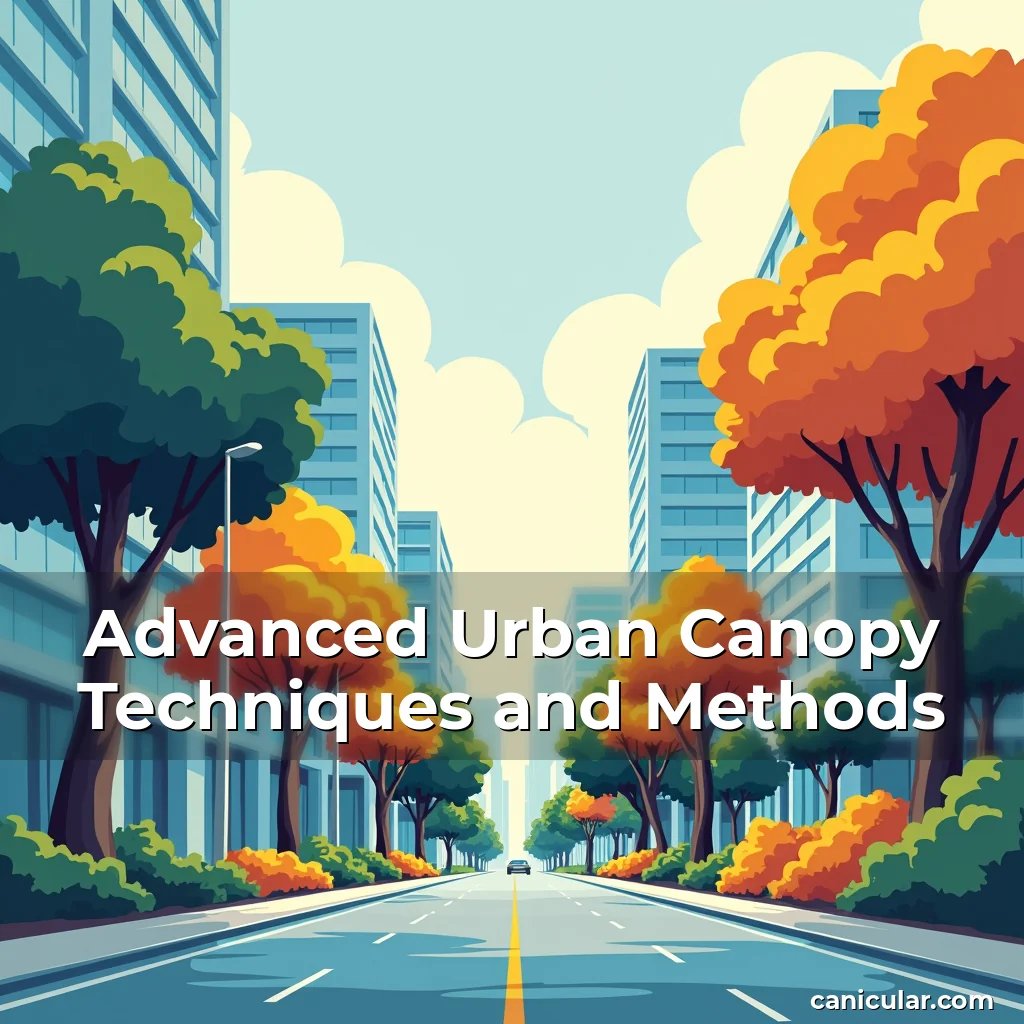
Advanced Urban Canopy Techniques and Methods
The Living Canopy: Transforming Cities Through Urban Forestry
In an era where concrete jungles dominate our skylines, the concept of an urban canopy is emerging as a beacon of hope for sustainable cities. This living network of trees not only beautifies neighborhoods but also plays a crucial role in environmental resilience.
Urban forestry initiatives are reshaping how we think about cityscapes, blending ecological benefits with urban aesthetics to create greener, healthier environments for residents.
The Science Behind Urban Canopies
Understanding the science of urban canopies begins with recognizing their multifaceted impact on urban ecosystems. Trees act as natural air purifiers by absorbing carbon dioxide and releasing oxygen through photosynthesis.
Moreover, they filter pollutants such as particulate matter, nitrogen oxides, and sulfur dioxide from the atmosphere, significantly improving local air quality. Their extensive root systems help prevent soil erosion while enhancing groundwater recharge processes.
- Air Quality Improvement: A single mature tree can absorb up to 48 pounds of carbon dioxide annually and produce enough oxygen for two people.
- Pollution Reduction: Tree canopies reduce ambient temperatures through shading effects, which can lower energy consumption for cooling by up to 30% during peak summer months.
Additionally, urban forests contribute to biodiversity conservation by providing habitats for various species that thrive within these green spaces. They support pollinators like bees and butterflies essential for maintaining healthy plant life across different regions.
These scientific principles underpin why investing in urban canopies is vital for creating resilient communities capable of adapting to climate change challenges effectively.
Economic Benefits of Urban Greenery
Urban canopies offer substantial economic advantages beyond their ecological contributions. Research consistently shows that areas with abundant tree cover experience higher property values compared to those without significant vegetation coverage.
This increase in real estate value translates into increased tax revenues for municipalities, enabling them to invest further in public services and infrastructure development projects.
Furthermore, businesses located near well-maintained parks or tree-lined streets often report improved customer foot traffic and sales figures due to enhanced visual appeal and perceived safety levels among shoppers.
Tourism industries benefit immensely too; cities renowned for their lush landscapes attract millions of visitors each year who seek out nature amidst urban settings.
Lastly, reducing reliance on artificial heating and cooling systems thanks to shade provided by dense foliage leads to considerable savings on utility bills at both individual household and municipal levels alike.
Social and Health Impacts of Urban Canopies
The social fabric of any community is intricately woven together by shared experiences and collective well-being. Urban canopies play a pivotal role in fostering stronger neighborhood bonds through communal gardening efforts and organized outdoor activities.
Studies have demonstrated that access to green spaces correlates strongly with better mental health outcomes including reduced stress levels and lower incidences of depression symptoms amongst urban dwellers.
Physically active lifestyles become more attainable when safe recreational facilities exist nearby—such as jogging trails flanked by trees—which encourage regular exercise routines beneficial for long-term cardiovascular health.
Cities implementing robust urban forest management programs observe decreased crime rates over time as natural surveillance features inherent within vegetated zones deter potential offenders.
Children raised in environments rich with flora develop stronger cognitive abilities early on, showing enhanced problem-solving skills attributed partly to exposure to diverse stimuli found outdoors versus indoor learning scenarios alone.
Challenges Facing Modern Urban Canopies
Despite numerous benefits associated with cultivating thriving urban canopies, several obstacles hinder progress toward achieving widespread adoption globally. Rapid population growth places immense pressure upon existing green infrastructures forcing planners to prioritize new developments over preservation measures.
Limited space availability poses another critical challenge since densely populated metropolitan centers struggle to allocate sufficient landmass required for planting additional trees let alone maintaining current stock adequately.
Budget constraints frequently impede implementation phases where funding sources may be insufficient or misallocated leading to delays in project execution timelines despite high demand from constituents seeking relief from deteriorating environmental conditions.
Climate-related threats such as prolonged droughts affecting sapling survival rates complicate matters further requiring innovative irrigation techniques or genetically modified varieties resistant against harsh weather patterns.
Lastly, lack of awareness regarding importance behind preserving native species contributes negatively towards monoculture practices damaging ecosystem balance potentially causing irreversible damage once established.
Strategies for Enhancing Urban Canopies
To overcome prevailing difficulties obstructing advancement of expansive urban canopy networks, strategic interventions need careful consideration based upon geographical specifics and cultural nuances influencing receptiveness towards proposed changes.
Collaborative governance models involving stakeholders ranging from governmental bodies down to grassroots organizations ensure inclusive decision-making processes reflecting true needs rather than imposed solutions lacking contextual relevance.
Integrating technology innovations like drone-assisted monitoring systems enables efficient tracking of tree health metrics facilitating timely responses before issues escalate beyond repair capabilities.
Community engagement strategies centered around education campaigns highlighting personal benefits derived from participation promote sustained involvement necessary for longevity success stories synonymous with successful urban reforestation movements worldwide.
Finally leveraging private sector partnerships offers scalable financing mechanisms allowing large scale implementations otherwise deemed unfeasible solely relying upon public funds alone limited by political cycles dictating budgetary allocations yearly.
Global Examples of Successful Urban Canopies
Across continents, visionary cities have pioneered groundbreaking approaches transforming barren expanses into vibrant oases teeming with life showcasing remarkable transformations attributable largely to dedicated urban forestry programs initiated decades ago yet still yielding dividends today.
Vancouver’s Greenest City Action Plan exemplifies best practices integrating ecological stewardship seamlessly alongside economic prosperity ensuring future generations inherit legacy worth celebrating proudly without compromising present day comforts enjoyed currently.
Mumbai’s ambitious initiative dubbed “Million Trees” aims at replanting vast tracts previously lost due industrialization thereby restoring ecological equilibrium disrupted years prior while simultaneously generating employment opportunities for locals engaged actively during plantation drives.
Medellín, Colombia transformed its image dramatically following violent past adopting aggressive greening policies resulting now recognized internationally for exemplary public spaces incorporating nature prominently within daily lives of citizens regardless age group involved.
Each case study underscores universal truth—that prioritizing investments directed specifically towards expanding urban canopy coverage yields manifold rewards spanning environmental restoration, socioeconomic upliftment, psychological rejuvenation, etc., collectively reinforcing notion that verdant surroundings indeed foster holistic human development essential component modern civilization aiming sustainably forward trajectory.
Future Directions for Urban Canopy Development
As global populations continue rising, future urban canopy development will require adaptive strategies tailored precisely according to evolving climatic variables impacting arboricultural viability factors critically determining long term sustainability prospects.
Emerging technologies promise transformative possibilities revolutionizing traditional methodologies employed historically managing urban greenery through application cutting edge advancements augmenting efficiency accuracy precision surpassing conventional means utilized hitherto.
Artificial intelligence algorithms analyzing satellite imagery combined with ground sensor data could predict optimal locations suitable for afforestation maximizing spatial utilization minimizing conflicts arising resource allocation dilemmas commonly encountered contemporary contexts characterized scarcity available plots designated exclusively trees.
Biophilic design philosophies advocating integration organic elements architecture itself represent paradigm shift encouraging architects engineers planners reimagine built environment harmoniously coexisting nature instead competing against it perpetually.
Furthermore interdisciplinary collaborations spanning fields botany ecology urban planning policy formulation indispensable forging cohesive frameworks addressing complex interdependencies governing successful implementation scaling effective models proven elsewhere replicated locally considering regional peculiarities unique identities shaping distinct trajectories pathways chosen pursuing common goal regenerative cities capable self-sustaining indefinitely.
Conclusion
The journey toward establishing flourishing urban canopies demands concerted effort combining scientific rigor pragmatic planning community spirit unwavering commitment realizing vision greener tomorrow accessible everyone irrespective socio-economic backgrounds varying degrees privilege afforded individuals residing cities.
By embracing this holistic approach encompassing technological innovation ecological wisdom participatory governance structures we empower ourselves create legacies enduring lifetimes benefiting countless descendants inheriting world balanced coexistence humanity planet Earth.

news is a contributor at Canicular. We are committed to providing well-researched, accurate, and valuable content to our readers.