Rainfall is officially measured at Phoenix Sky Harbor Airport Why Here what to know
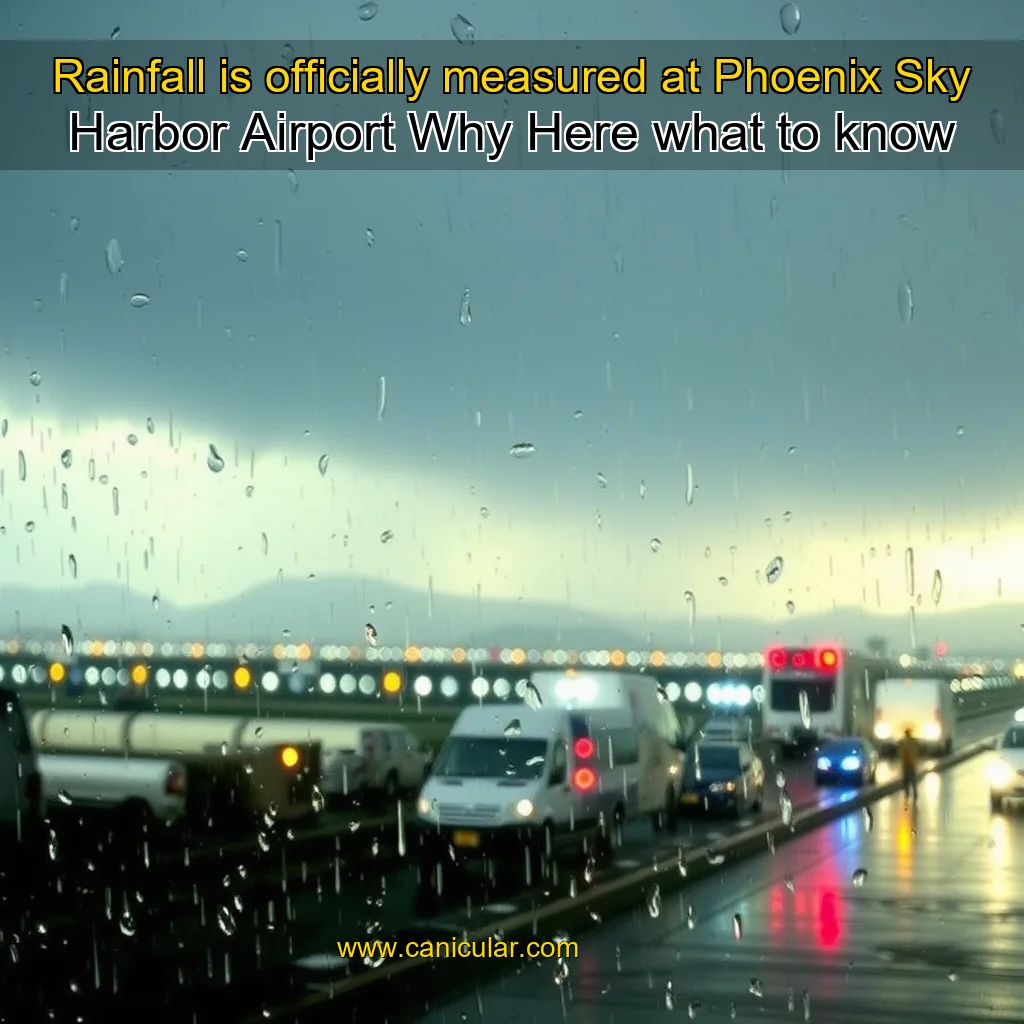
This is because the airport is located in the middle of the city, making it a central hub for weather observations.
Understanding the Role of Phoenix Sky Harbor Airport in Weather Measurement
Phoenix Sky Harbor Airport is the primary location for weather observations in Phoenix, Arizona. The airport’s central location within the city ensures that weather data collected here is representative of the entire metropolitan area.
Why the Airport is Chosen for Weather Measurement
Several factors contribute to the airport’s selection as the primary weather measurement location:
The airport’s observing station is a joint effort between the weather services, the Federal Aviation Administration, and the U.S. Department of Defense.
The History of Weather Observation at the Airport
The airport’s observing station has a rich history of weather observation, dating back to 1954. Prior to this, the official temperature was recorded in the city’s downtown area.
The Importance of Proper Instrument Placement
Proper placement of temperature sensors is crucial for accurate measurements. Incorrect placement can lead to inaccurate readings, which can have significant consequences in various fields such as aviation, agriculture, and environmental monitoring. Factors to consider when placing temperature sensors include:
- Sunlight exposure: Direct sunlight can cause temperature sensors to overheat, leading to inaccurate readings. Wind direction and speed: Wind can affect the accuracy of temperature measurements by blowing air over the sensor or causing it to vibrate. Proximity to heat sources: Temperature sensors should be placed away from heat sources such as engines, generators, or other equipment that can generate heat. Proximity to cold sources: Temperature sensors should also be placed away from cold sources such as air conditioning units or refrigeration equipment.
The data is collected from the surface and up to 10,000 feet. The Phoenix Sky Harbor International Airport is a public airport located in the heart of the city of Phoenix, Arizona, USA. The airport is a major transportation hub, serving both domestic and international flights. It is one of the busiest airports in the United States, with over 43 million passengers in 2020. Phoenix Sky Harbor International Airport is the official rain recording station for the Phoenix metro area. The instruments are automated, transmitting data to their corresponding NWS office. There are backup instruments at another location on the airport grounds. The airport has a number of amenities and services, including a hotel, restaurants, and retail stores. The airport is also a popular destination for business travelers and tourists alike. The airport is equipped with modern technology, including advanced security screening and baggage handling systems.
The closer you are to the center of the storm’s activity, the higher totals of precipitation you’ll get.
Understanding Winter Storms
Winter storms are a type of low-pressure system that forms over cold air masses. These storms are characterized by heavy snowfall, strong winds, and freezing temperatures. The formation of winter storms is influenced by the interaction between cold air masses and warm air masses.
Factors Influencing Winter Storm Formation
- Cold air masses: Winter storms form when cold air masses move into an area, bringing with them cold temperatures and dry air. Warm air masses: The interaction between cold and warm air masses creates instability in the atmosphere, leading to the formation of clouds and precipitation. Moisture: The presence of moisture in the air is essential for the formation of winter storms. Moist air from the Gulf of Mexico or other large bodies of water can fuel the development of winter storms. ## Characteristics of Winter Storms**
- Snowfall totals: Winter storms can produce significant snowfall totals, with some storms dumping over 1 foot of snow in a short period. Snowfall rates: Snowfall rates can be intense, with some storms producing rates of over 1 inch per hour. Blowing snow: The strong winds associated with winter storms can create blowing snow, reducing visibility and making travel hazardous. ### Strong Winds**
- Wind speeds: Winter storms can produce strong winds, with gusts reaching speeds of over 50 mph.
They form when warm air rises rapidly, creating towering cumulus clouds that can reach heights of over 10,000 meters.
Understanding the Role of Convective Storms in Summer Rainfall
Convective storms play a crucial role in driving rainfall in the summer months. These storms are characterized by their rapid growth and brief duration, often lasting only an hour or so. Despite their brevity, they can produce significant amounts of rainfall, making them a vital component of the summer weather pattern. Key characteristics of convective storms:
- Small and brief
- Typically weak
- Form when warm air rises rapidly
- Create towering cumulus clouds that can reach heights of over 10,000 meters
The Formation of Convective Storms
Convective storms form when warm air rises rapidly, creating areas of low pressure near the ground. As the air rises, it cools, and the water vapor in the air condenses, forming clouds.
news is a contributor at Canicular. We are committed to providing well-researched, accurate, and valuable content to our readers.
You May Also Like