Summer: The Best Time of the Year

The allure of summer is undeniable. As the warmest season of the year, it offers a plethora of activities, warm weather, and long days that are perfect for outdoor fun. For many, summer is a time of relaxation, adventure, and joy.
Summer Forecast
The Farmer’s Almanac has released its summer forecast, and it’s predicting a hot and dry summer for much of the United States and Canada. The exception is the southern part of Florida, which is expected to be cooler and rainier. This prediction is consistent with last summer’s record-breaking heat, and it’s likely that we’ll see similar temperatures this year.
- Farmer’s Almanac notes that the summer forecast provides long-range seasonal forecasts to give a general idea of what to expect across the U.S. and Canada.
- The forecast covers the three months of summer — June, July, and August — focusing on temperature and precipitation trends compared to historical 30-year averages.
- The update is every decade, ensuring that the forecast remains relevant and accurate.
The Definition of Summer
The definition of summer is straightforward, according to the Cambridge Dictionary: “the season of the year between spring and fall when the weather is warmest, lasting from June to September north of the equator and from December to March south of the equator.” However, the origin of the word “summer” is fascinating. According to Dictionary.com, it comes from the Old English word for the season, sumor, which is related to the Dutch zomer, the German Sommer, and the Sanskrit samā, meaning “year.”
Summer Solstice
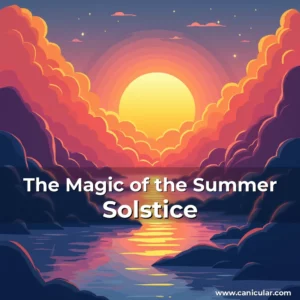
The first official day of summer is summer solstice, which occurs on the longest day of the year. This year, it falls on Friday, June 20. The National Weather Service explains that summer solstice occurs when the earth’s tilt toward/from the sun is at a maximum, causing the sun to appear at its highest elevation. The summer solstice is also the moment when the sun is directly over the Tropic of Cancer, located at 23.5° latitude North.
| Key Points | • Summer is the warmest season of the year, offering a range of activities and warm weather. |
| • The Farmer’s Almanac predicts a hot and dry summer for most of the U.S. and Canada, except for southern Florida. | • Summer solstice occurs on the longest day of the year, typically on June 20 or 21. |
Highlights and Fun Facts
* The summer season is often associated with outdoor activities such as swimming, hiking, and picnics. * Summer is also a popular time for vacations and travel, with many people taking advantage of the warm weather to explore new destinations. * The summer solstice is often celebrated with festivals and events, such as the summer solstice festival in Stonehenge, England. * The longest day of the year is often referred to as the “midsummer” in many cultures.
Definitions
“The season of the year between spring and fall when the weather is warmest, lasting from June to September north of the equator and from December to March south of the equator.” — Cambridge Dictionary
Overall, summer is a wonderful time of year that offers a range of activities, warm weather, and long days perfect for outdoor fun. With the Farmer’s Almanac predicting a hot and dry summer for most of the U.S. and Canada, it’s a great time to get outside and enjoy the sunshine. Whether you’re looking forward to summer solstice, festivals, or simply relaxing in the sun, there’s something for everyone to enjoy this summer.

news is a contributor at Canicular. We are committed to providing well-researched, accurate, and valuable content to our readers.