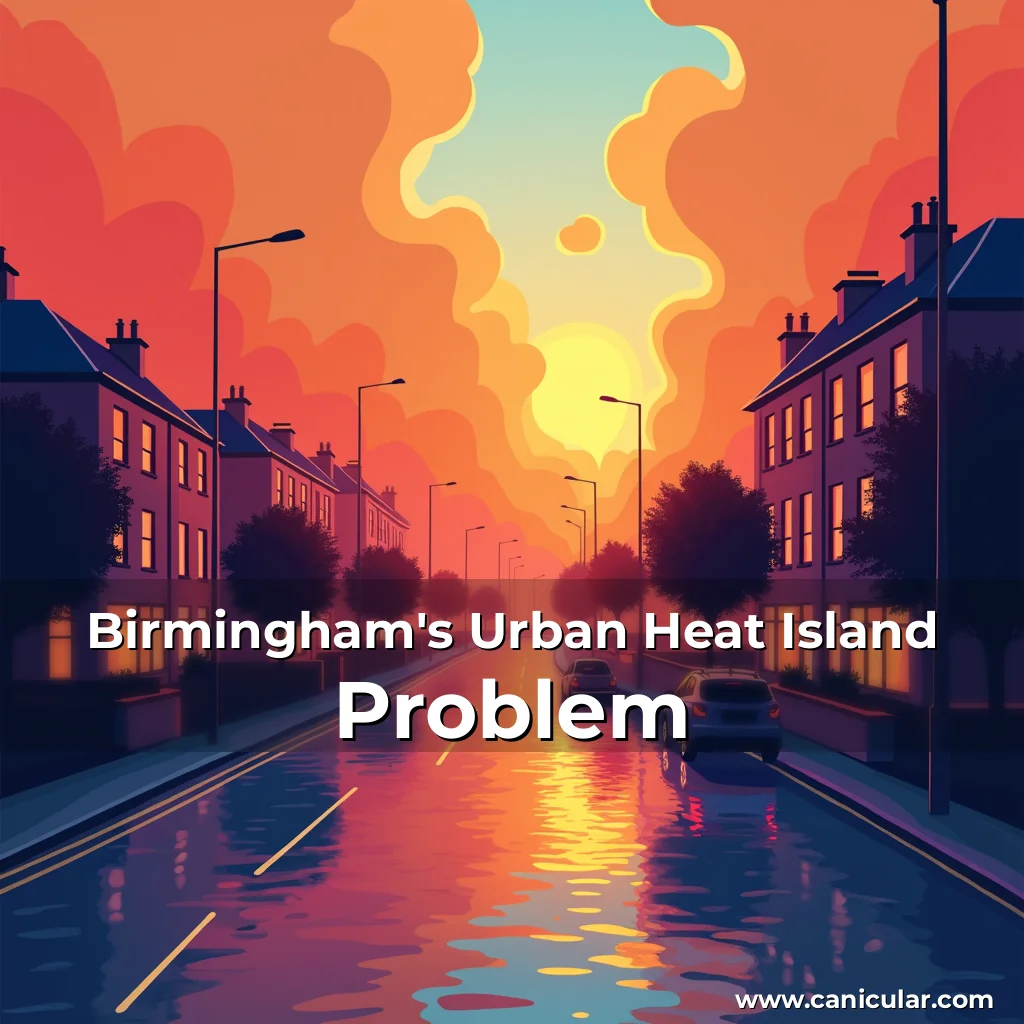
The city of Birmingham, Alabama, is known for its rich history and warm climate, but beneath the surface lies a different story. When the sun beats down on the city, it creates a unique phenomenon known as an urban heat island.
The Science Behind Urban Heat Islands
Urban heat islands occur when hard surfaces like asphalt, concrete, and bricks absorb and retain heat during the day, releasing it slowly at night. This can lead to warmer temperatures in urban areas compared to nearby rural areas.
- Hard surfaces like asphalt, concrete, and bricks retain heat during the day and slowly release it at night.
- This can lead to warmer temperatures in urban areas compared to nearby rural areas.
- Urban heat islands can have negative effects on human health, infrastructure, and the environment.
A Local Initiative to Combat the Problem
A group called Cool Green Trees is taking action to combat the negative effects of urban heat islands by planting more trees in Jefferson County. The initiative aims to restore canopy using native trees to produce more shade and reduce the burden of urban heat islands.
“In a lot of communities in Jefferson County, a lot of neighborhoods, roads, right of ways, parks… there aren’t that many spots for shade, especially when there are some aging trees, storms and trees falling. We really need to replace that shade,”
Patrick McMahon, Urban Arborist with Cool Green Trees
A Community Comes Together
Cool Green Trees recently came together with the community to plant dozens of trees in the park on Norwood Boulevard. Nearby, you’ll also find new trees along the street where Keith Smith grew up. Smith is currently renovating his dad’s house there.
- Keith Smith, a community member, believes the project will make an impact.
- Smith thinks the project will add more shade to the area, making it a cooler place to be.
- Smith is excited to see the positive effects of the project in his own neighborhood.
A Long-Term Solution
Bringing down the temperature in neighborhoods doesn’t happen overnight. However, Patrick McMahon believes that what Cool Green Trees is doing now will make a difference and create a canopy of protection for the future.
- Once a tree is planted, Cool Green Trees will help maintain it for at least two years.
- The group’s goal is to create a sustainable and environmentally friendly solution to urban heat islands.
- By planting more trees and restoring canopy, Cool Green Trees aims to reduce the burden of urban heat islands and create a healthier environment.
A City-Wide Impact
Cities around the country are taking note of Cool Green Trees’ initiative. In March, Birmingham city leaders announced a sustainability project that will address issues like urban heat islands, storm water management, and more.
| Project Name | Description |
|---|---|
| Birmingham Sustainability Project | A comprehensive plan to address urban heat islands, storm water management, and other environmental concerns. |
Conclusion
The urban heat island problem in Birmingham is a complex issue that requires a multifaceted approach. Cool Green Trees’ initiative is a step in the right direction, and with the support of the community, it can make a significant impact. By planting more trees and restoring canopy, Cool Green Trees aims to create a healthier and more sustainable environment for the people of Birmingham.